Traducir a Libertella
DOI:
https://doi.org/10.6093/2280-4110/10440Parole chiave:
Héctor Libertella, traduzione, letto-scritturaAbstract
Héctor Libertella è considerato dalla critica specializzata come l’iniziatore del genere della “fiction critica”, grazie ai suoi apporti significativi nella teoria e pratica letteraria, alle sue ricerche su letto-scrittura e ricezione, e alla riflessione sulle relazioni tra estetica e mercato editoriale. Prendendo come punto di partenza L’albero di Saussure (2000), andremo a ripercorrere la “rete ermetica” libertelliana, percorso di riscrittura costante di una stessa opera, intreccio di parole chiave e citazioni dove la scrittura “resiste sempre un po’ all’interpretazione”. La responsabilità che accompagna il privilegio di tradurre Libertella per la prima volta in Italia e in assoluto ha imposto nell’elaborazione del testo tradotto un approccio assai cauto e il meno personale possibile; approccio che ha coinciso, tanto per l’analisi testuale come per la traduzione, con un’impostazione strutturale, basata nella semiotica della cultura applicata alla traduzione di Torop, nella semiotica del testo di Fontanille e nella semiotica interpretativa di Eco, su tutti. Le considerazioni sulla scrittura libertelliana offriranno perciò anche una serie di spunti per una semiotica della traduzione che si ponga come obiettivo di offrire al “Lettore Qualsiasi” libertelliano, che è ciascun lettore, l’interpretazione che, in potenza, possa racchiudere tutte quelle possibili, e che punti soprattutto a preservare gli aspetti culturali dei testi originali senza cadere in una rielaborazione esotista. L’approccio all’autore dal punto di vista traduttologico caratterizza quest’articolo, pur approfittando la riflessione teorico-linguistica per offrire al potenziale lettore una visione della poetica autoriale attraverso citazioni dirette di estratti da sue opere.
Downloads
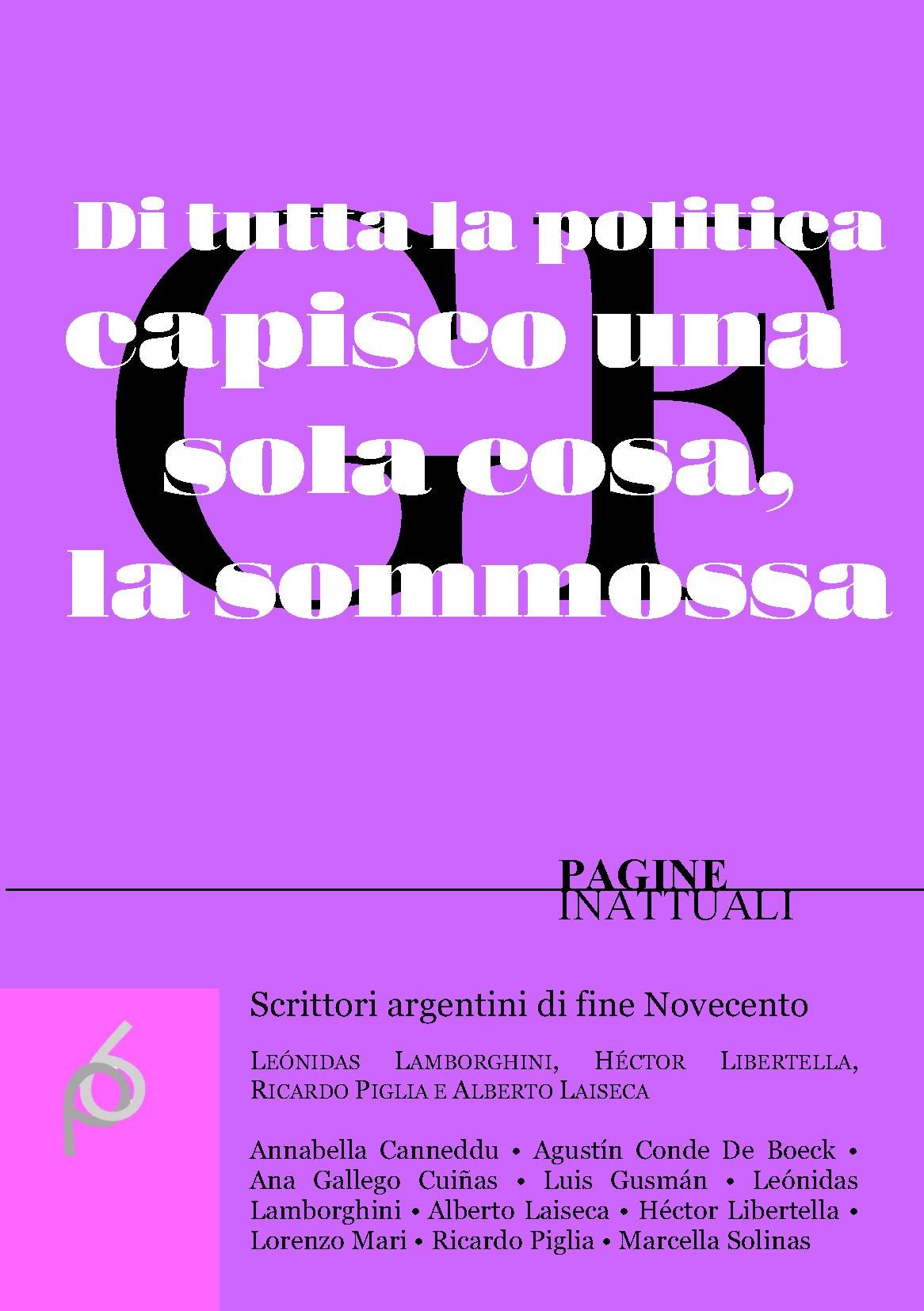
##submission.downloads##
Pubblicato
Come citare
Fascicolo
Sezione
Licenza
Pagine Inattuali è pubblicata ad accesso aperto, per assicurare la più ampia diffusione e circolazione possibile al sapere vagliato dalla comunità scientifica.
Tutto il materiale pubblicato è distribuito con licenza "Creative Commons - Attribuzione" (CC-BY 4.0).
Con la licenza CC-BY, gli autori mantengono il copyright sui loro contributi, garantendo tuttavia a chiunque la possibilità di scaricare, riusare, ristampare e distribuire i materiali pubblicati, con la sola condizione che siano correttamente citati l'autore e la sede di prima pubblicazione.