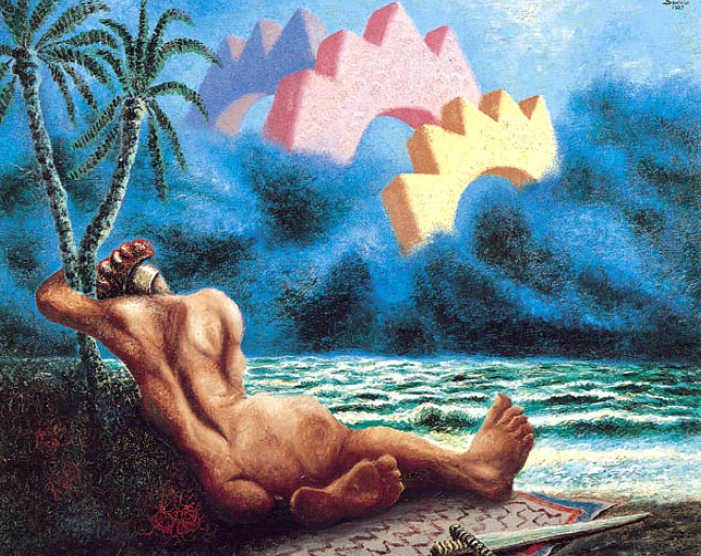
The idealization, creation and perversion of the landscape
DOI:
https://doi.org/10.6092/2281-4574/1163Keywords:
paesaggio, creatività, idealizzazioneAbstract
Already in the mind of the paleolithic hunter it is possible to see the existence of a primitive idea of landscape and an innate creative will with regard to it. Going back to the beginning, the history of civilization can follow the traces of the progressive intensification of the dialogue between man and landscape, up to the most recent times and the irreversible break between man and nature. And yet, beyond the physical changes at first appreciated and then suffered by the landscape at the hands of man, there exists a necessary relationship between nature and the individual which resides in the contingency of the tangible world and which has to do with the ideal dimension of myth and imagination. From the beginning in fact the landscape has been even the means of our contact with the immaterial dimension of existence. From this point of view it is possible to see the cult of the garden, just as the artistic landscape as well as the literary one, as expressions of the intellectual urgency to embrace that which is fleeing from a realistic view so as to keep it in our imagination and collective conscience.
Downloads
Downloads
Published
Issue
Section
License
Gli autori che pubblicano su questa rivista accettano le seguenti condizioni:- Gli autori mantengono i diritti sulla loro opera e cedono alla rivista il diritto di prima pubblicazione dell'opera, contemporaneamente licenziata sotto una Licenza Creative Commons - Attribuzione che permette ad altri di condividere l'opera indicando la paternità intellettuale e la prima pubblicazione su questa rivista.
- Gli autori possono aderire ad altri accordi di licenza non esclusiva per la distribuzione della versione dell'opera pubblicata (es. depositarla in un archivio istituzionale o pubblicarla in una monografia), a patto di indicare che la prima pubblicazione è avvenuta su questa rivista.
- Gli autori possono diffondere la loro opera online (es. in repository istituzionali o nel loro sito web) prima e durante il processo di submission, poiché può portare a scambi produttivi e aumentare le citazioni dell'opera pubblicata (Vedi The Effect of Open Access).