Brownfields in the local and metropolitan government: the company town of Colleferro (Rome)
DOI:
https://doi.org/10.6092/2281-4574/3023Keywords:
Brownfields, utilities and infrastructures, redevelopment, metropolitan area, RomeAbstract
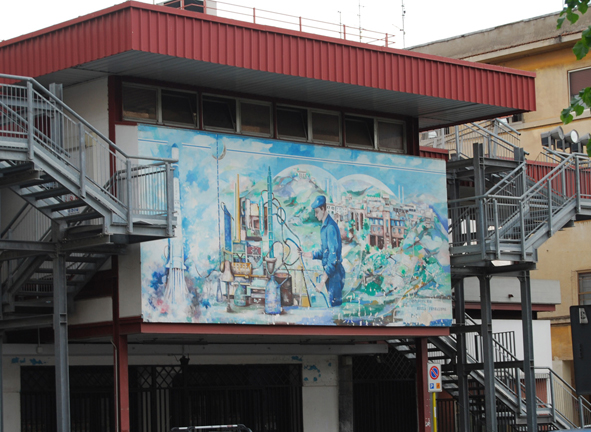
In order to overcome the general socio-economic crisis, communities and cities are rediscovering the strategic role of location factors as a condition that promotes the participation of urban platforms to global competition. Energy and environmental policy improves the urban regeneration, suggesting priority interest for empty spaces such as the industrial brownfields. If local government doesn’t affect these priorities, the return to the central leadership is already. In the scenario of metropolitan Rome, for example, the twentieth century company town of Colleferro highlights, with vast industrial brownfields, acceptable utilities and infrastructures, significant landscapes as the outcome of site-specific industrial history. The provincial plan intends to involve those wastelands to enhance the metropolitan platform of Rome: as a consequence an intense local and territorial debate is searching for operational proposals. On the one hand the debate intends to involve governments about some urban renewal programs, based on established rules but not always efficient in their various characterizations, on the other one the goal is valuing the building scale because considered more feasible. The critical environmental issues are largely manageable, but in the face at the times of the crisis, the local government must demonstrate strength and leadership, also in view of the investment opportunities that lie ahead with the new policy announced by the ECB.
Downloads
Downloads
Published
Issue
Section
License
Gli autori che pubblicano su questa rivista accettano le seguenti condizioni:- Gli autori mantengono i diritti sulla loro opera e cedono alla rivista il diritto di prima pubblicazione dell'opera, contemporaneamente licenziata sotto una Licenza Creative Commons - Attribuzione che permette ad altri di condividere l'opera indicando la paternità intellettuale e la prima pubblicazione su questa rivista.
- Gli autori possono aderire ad altri accordi di licenza non esclusiva per la distribuzione della versione dell'opera pubblicata (es. depositarla in un archivio istituzionale o pubblicarla in una monografia), a patto di indicare che la prima pubblicazione è avvenuta su questa rivista.
- Gli autori possono diffondere la loro opera online (es. in repository istituzionali o nel loro sito web) prima e durante il processo di submission, poiché può portare a scambi produttivi e aumentare le citazioni dell'opera pubblicata (Vedi The Effect of Open Access).