Artistic experiments of urban acupuncture
DOI:
https://doi.org/10.6092/2281-4574/6631Abstract
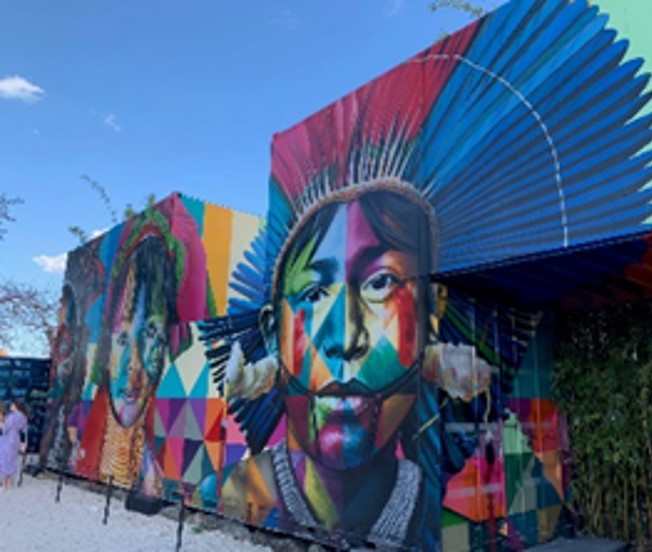
Urban art has become one of the main subject of a collective demand for improvement concerning the aesthetic quality of today’s city, as an element capable of changing the perception of a place through the filter of culture, creativity and therefore promoting positive impacts on the local community by means of the reconfiguration of space perception, the diffusion of a collective aesthetic awareness and the attribution of a positive value to artistic intervention and creativity.
In the last decade, street artists’ murals have been transformed from spontaneous individual denunciation to committed interventions by private or public institutions, thus becoming rightfully among the most appreciated interventions for the urban redevelopment of suburbs, abandoned areas or degraded building. When local communities participate the design process, urban art aims to revitalize the streets, squares, urban public spaces, so that they return being the privileged places for meeting.
The educational result of citizens’ participation in the artistic installations is the so called “peer-to-peer learning”, that is people who learn, create and therefore teach others how to do it.
In the last decade the new Information and Communication Technologies (ICT) have assumed an important role in the artistic field, determining a transformation of people’s mental processes and a different way of living and perceiving places, characterized by narration, creativity and the playful aspect of interactivity by means of digital technologies. In this scenario there are some street art experiments, whose murals are animated by digital contents that overlap perfectly with the painting, interacting with the pictorial shapes and completing their meaning. The more traditional open air museum thus turns into an innovative art-infoscape, both for local communities and for the connected tourist circuit.
Downloads
Downloads
Published
Issue
Section
License
Gli autori che pubblicano su questa rivista accettano le seguenti condizioni:- Gli autori mantengono i diritti sulla loro opera e cedono alla rivista il diritto di prima pubblicazione dell'opera, contemporaneamente licenziata sotto una Licenza Creative Commons - Attribuzione che permette ad altri di condividere l'opera indicando la paternità intellettuale e la prima pubblicazione su questa rivista.
- Gli autori possono aderire ad altri accordi di licenza non esclusiva per la distribuzione della versione dell'opera pubblicata (es. depositarla in un archivio istituzionale o pubblicarla in una monografia), a patto di indicare che la prima pubblicazione è avvenuta su questa rivista.
- Gli autori possono diffondere la loro opera online (es. in repository istituzionali o nel loro sito web) prima e durante il processo di submission, poiché può portare a scambi produttivi e aumentare le citazioni dell'opera pubblicata (Vedi The Effect of Open Access).