
Urban System Analysis Through Behavioural Perception: Case of A City in Global South
DOI:
https://doi.org/10.6092/2281-4574/6633Abstract
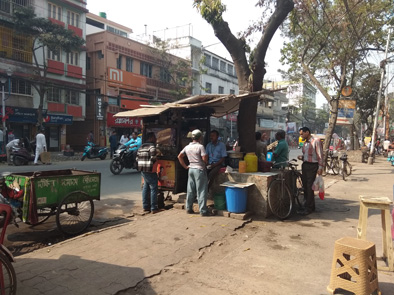
Cybernetics helps us understanding the nature of urban spaces with environmental and behavioural perception as the fundamental tools. Nowadays, unorganized encroachments of street vendors/ hawkers, slums etc. in urban areas are a growing problem in the developing countries of Global South, leading to conflicts and unplanned characteristics. This paper focuses on organizing the activities related to encroachments of street vendors/ hawkers occupying the sides of busy urban streets, by organizing the behaviour of the end users. An urban place can be analysed along with its users. Users behaviour during different activities gives different possibilities, proximal cues of an area, which can be formulated as self-sustaining and rotating ‘System’ and ‘Sub-systems’. Street vending/ hawking on a busy urban street is related with many other sub-activities like buying of those goods and travelling simultaneously. These activities create a conflict and a situation of congestion and pandemonium. This paper will emphasise how environmental and behavioural perception can upgrade the ‘System and Sub-systems’ framed out of these hawking, buying and travelling activities, into an effective and flexible one with reduced nuisances by behavioural change. There is a question, “how people will react if their regular behaviour practice changes, will it be good to them or not?” Sometimes change in behaviour makes their activities easier, it is just the arrangement of what they want, what are the positive cues within their behaviour while doing the systematic activities or what they actually tend to.
Downloads
Downloads
Published
Issue
Section
License
Gli autori che pubblicano su questa rivista accettano le seguenti condizioni:- Gli autori mantengono i diritti sulla loro opera e cedono alla rivista il diritto di prima pubblicazione dell'opera, contemporaneamente licenziata sotto una Licenza Creative Commons - Attribuzione che permette ad altri di condividere l'opera indicando la paternità intellettuale e la prima pubblicazione su questa rivista.
- Gli autori possono aderire ad altri accordi di licenza non esclusiva per la distribuzione della versione dell'opera pubblicata (es. depositarla in un archivio istituzionale o pubblicarla in una monografia), a patto di indicare che la prima pubblicazione è avvenuta su questa rivista.
- Gli autori possono diffondere la loro opera online (es. in repository istituzionali o nel loro sito web) prima e durante il processo di submission, poiché può portare a scambi produttivi e aumentare le citazioni dell'opera pubblicata (Vedi The Effect of Open Access).