Acupuncture and tactical urbanism in the regeneration of cities
DOI:
https://doi.org/10.6092/2281-4574/6636Abstract
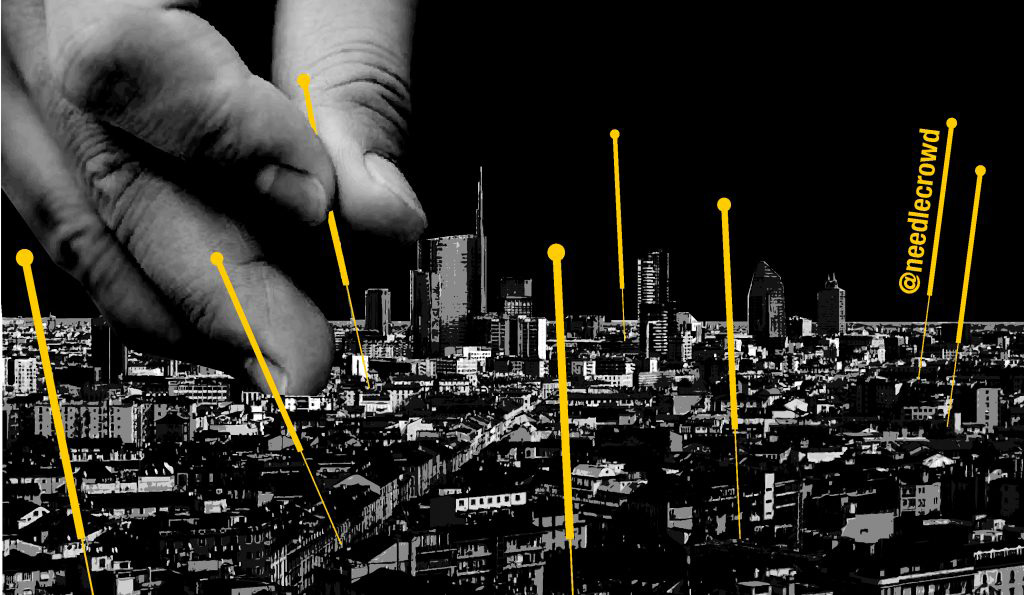
The analysis and transformation of the city require a continuous need to change scale in order to identify efficient solutions. To this aim it is necessary to develop the ability to look at the territory according to large scale strategies but, at the same time, to focus on small points of the city, acting alternatively in a top-down process and viceversa. Among the practices of the bottom-up vision, attention is paid to urban acupuncture and tactical urban planning, capable of intervening quickly in the regeneration of the contemporary city.
Urban acupuncture can be described as a kind of micro-urban planning, because it refers to the small scale and it is attentive to the public space, where communities have the opportunity to build solid networks of cooperation and collaboration. Local actions usually trigger processes of consciousness in political representatives, who acquire experience and willingness to act in the urban context activating virtuous processes of exchange of ideas and actions with citizens. Urban acupuncture is analysed with reference to the theoretical contributions and successful practices developed by its theorists recognized in the international debate (De Solà-Morales, Lerner, Casagrande).
Tactical Urbanism, an interesting urban regeneration practice of the United States, also provides many models of local micro-actions that can modify the urban environment, at low cost and in short time.
The TRIA journal, in the current and next issue, presents interesting articles that discuss acupuncture and tactical urban planning, particularly focusing on the contribution of artistic practices, and not only, to the enhancement of urban space, also through innovative digital representation techniques which contribute to the determination of a virtual landscape, called infoscape.
Downloads
Downloads
Published
Issue
Section
License
Gli autori che pubblicano su questa rivista accettano le seguenti condizioni:- Gli autori mantengono i diritti sulla loro opera e cedono alla rivista il diritto di prima pubblicazione dell'opera, contemporaneamente licenziata sotto una Licenza Creative Commons - Attribuzione che permette ad altri di condividere l'opera indicando la paternità intellettuale e la prima pubblicazione su questa rivista.
- Gli autori possono aderire ad altri accordi di licenza non esclusiva per la distribuzione della versione dell'opera pubblicata (es. depositarla in un archivio istituzionale o pubblicarla in una monografia), a patto di indicare che la prima pubblicazione è avvenuta su questa rivista.
- Gli autori possono diffondere la loro opera online (es. in repository istituzionali o nel loro sito web) prima e durante il processo di submission, poiché può portare a scambi produttivi e aumentare le citazioni dell'opera pubblicata (Vedi The Effect of Open Access).