An integrated didactic experiment, oriented from the Diagram to the Design to the Plan
DOI:
https://doi.org/10.6092/2281-4574/6953Abstract
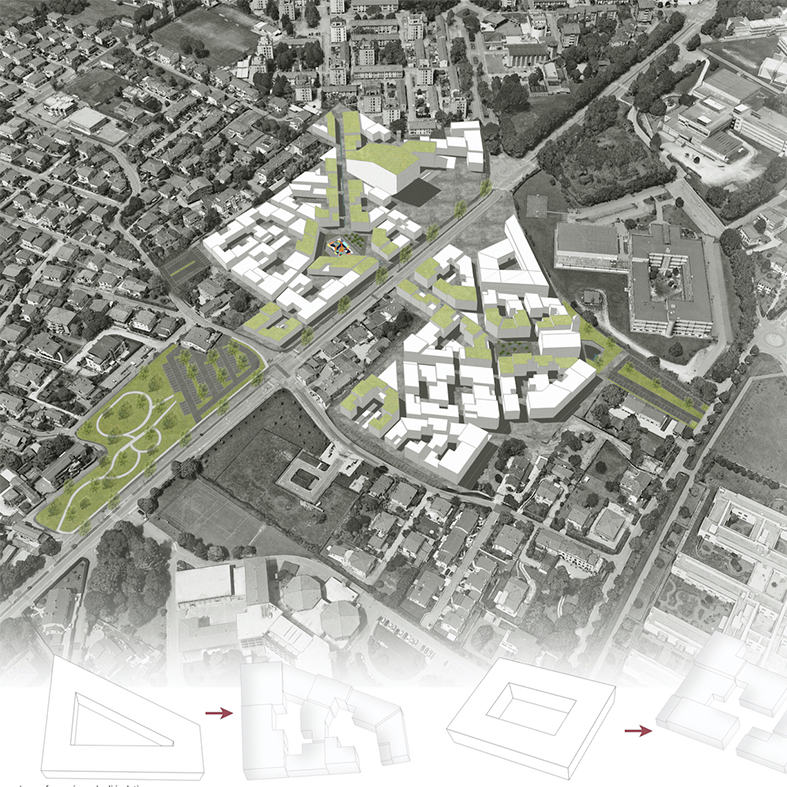
Taking inspiration from some experiments conducted at the integrated planning laboratory of the Magistral Architecture Course of the University of Udine, we present the work carried out in the academic year 2018-2019 on an area north-west of the center of Treviso, characterized by large settlements of economic and popular building and large urban gaps between these and the private building in the area.
The text describes the project areas and the methodology adopted, aimed at reversing the urban logic from the zoning that precedes the project towards a logic that develops a rough volumetric project of the neighborhood anticipating the plan. In particular, reference is made to the need to apply volumetric urban planning for large districts, with the aim of slow regeneration over time, trying to bring back to the city the volumes eliminated in rural areas that are inappropriate to these, characteristics of the spreading of building objects of the recent past.
In this design experiment the adaptability of the project to the current regional and national legislation was verified. The project has been adapted to the Regulatory plan (PAT + PI in the Veneto region). To this must be added the research carried out to identify privileged areas for the landing of building credits, foreseen by the Veneto regional urban legislation to reduce sprawl and regenerate the urban peripheral districts.
Downloads
Downloads
Published
Issue
Section
License
Gli autori che pubblicano su questa rivista accettano le seguenti condizioni:- Gli autori mantengono i diritti sulla loro opera e cedono alla rivista il diritto di prima pubblicazione dell'opera, contemporaneamente licenziata sotto una Licenza Creative Commons - Attribuzione che permette ad altri di condividere l'opera indicando la paternità intellettuale e la prima pubblicazione su questa rivista.
- Gli autori possono aderire ad altri accordi di licenza non esclusiva per la distribuzione della versione dell'opera pubblicata (es. depositarla in un archivio istituzionale o pubblicarla in una monografia), a patto di indicare che la prima pubblicazione è avvenuta su questa rivista.
- Gli autori possono diffondere la loro opera online (es. in repository istituzionali o nel loro sito web) prima e durante il processo di submission, poiché può portare a scambi produttivi e aumentare le citazioni dell'opera pubblicata (Vedi The Effect of Open Access).