Multi-scalar design practices in contemporary city
DOI:
https://doi.org/10.6092/2281-4574/7599Abstract
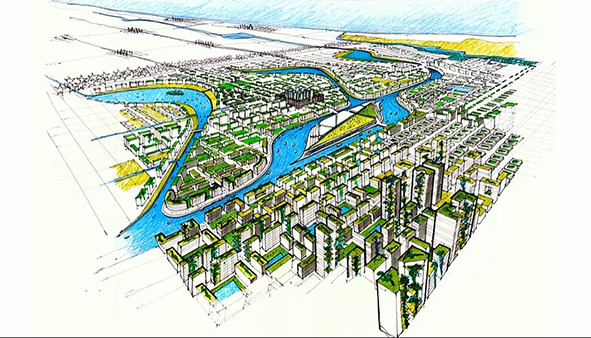
Contemporary space needs to manage the complex transformations that distinguish it: regeneration becomes a priority and is linked to multi-scalar design approaches, for example, practices that involve top-down actions, promoted by government bodies and administrations, and bottom-up interventions which are based on participatory processes. In particular, the latter refer to planned or even spontaneous micro-planning operations: their purpose is to trigger virtuous regeneration processes that spread the beneficial effect from small degraded or abandoned spaces to the entire urban system.
Nowadays, urban planning research has defined some methodological principles that unite bottom-up practices, including the determination of key points, the identification of plausible future scenarios, participatory planning, the speed of intervention, educational processes for population and technicians, small scale interventions and the concept of creating places. It is possible to give new meaning to urban spaces by intervening promptly and in collaboration with users, limiting costs and transforming areas with no values into real places.
The perception of public space certainly has great value for urban design and participatory processes, as it allows for the construction of a strong urban identity. It is therefore logical to ask what are the elements that guarantee an acceptable urban quality.
In this sense, the new communication technologies profoundly influence the perception and interpretation of urban space: digital networks integrate with the knowledge of technicians and with the users’ ability to understand the city. The large amount of information solidly connects the city and citizens: the recombination of these data can offer new possibilities for planning and management of the urban organism.
Downloads
Downloads
Published
Issue
Section
License
Gli autori che pubblicano su questa rivista accettano le seguenti condizioni:- Gli autori mantengono i diritti sulla loro opera e cedono alla rivista il diritto di prima pubblicazione dell'opera, contemporaneamente licenziata sotto una Licenza Creative Commons - Attribuzione che permette ad altri di condividere l'opera indicando la paternità intellettuale e la prima pubblicazione su questa rivista.
- Gli autori possono aderire ad altri accordi di licenza non esclusiva per la distribuzione della versione dell'opera pubblicata (es. depositarla in un archivio istituzionale o pubblicarla in una monografia), a patto di indicare che la prima pubblicazione è avvenuta su questa rivista.
- Gli autori possono diffondere la loro opera online (es. in repository istituzionali o nel loro sito web) prima e durante il processo di submission, poiché può portare a scambi produttivi e aumentare le citazioni dell'opera pubblicata (Vedi The Effect of Open Access).