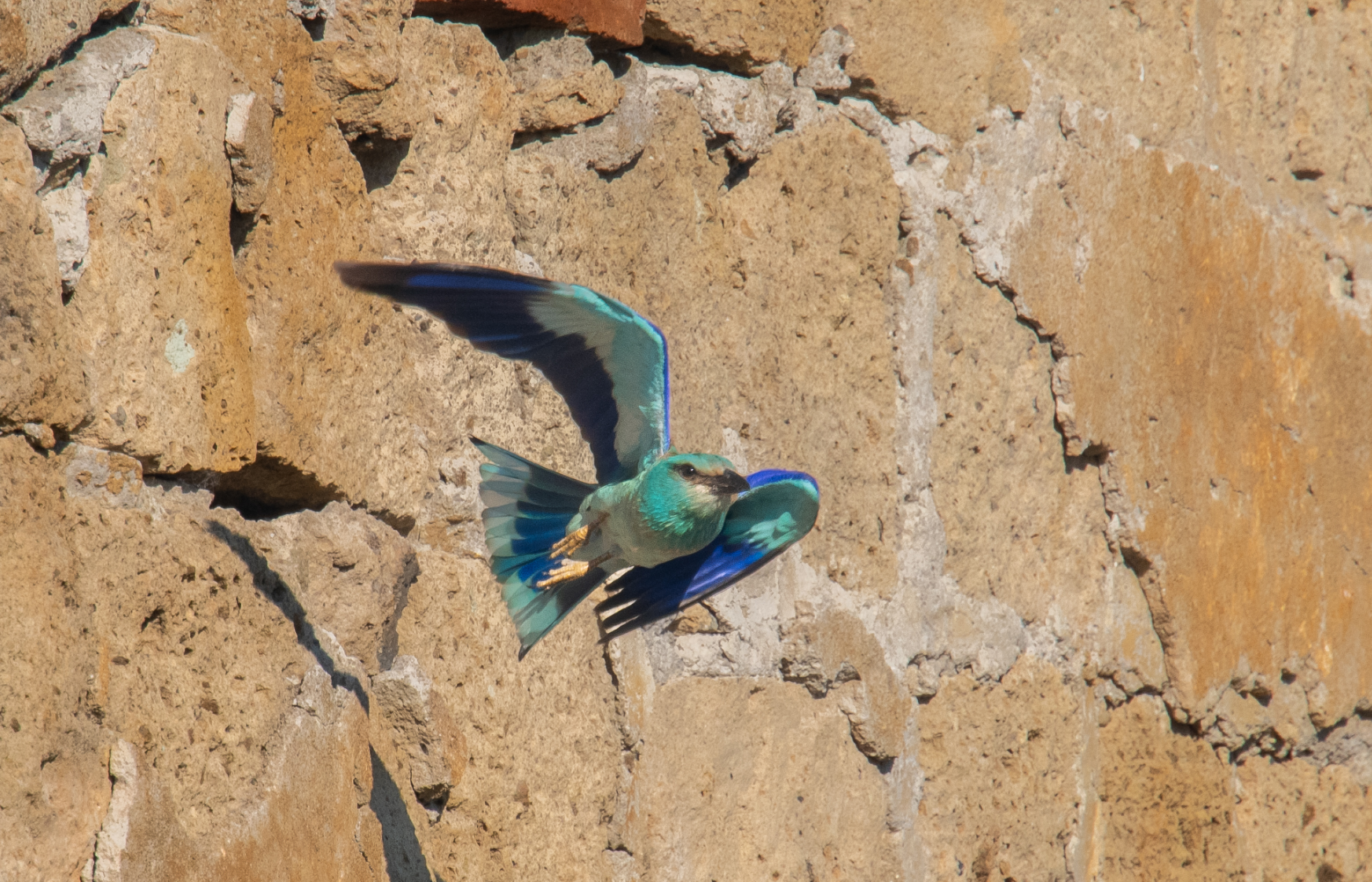
Expansion in the selection of breeding sites by the European Roller (Coracias garrulus) in the Caserta area

Authors

  • Danila Mastronardi Associazione Studi Ornitologici Italia Meridionale odv, Via Cavalli di Bronzo, 95 – 80046 S. Giorgio a Cremano
  • Bruno Dovere Associazione Studi Ornitologici Italia Meridionale odv Via Cavalli di Bronzo, 95 – 80046 S.Giorgio a Cremano
  • Giuseppe Pesapane Associazione Studi Ornitologici Italia Meridionale odv Via Cavalli di Bronzo, 95 – 80046 S.Giorgio a Cremano
  • Sergio Tanga Associazione Studi Ornitologici Italia Meridionale odv Via Cavalli di Bronzo, 95 – 80046 S.Giorgio a Cremano
  • Elio Esse Associazione Studi Ornitologici Italia Meridionale odv Via Cavalli di Bronzo, 95 – 80046 S.Giorgio a Cremano

DOI:

https://doi.org/10.6093/2724-4393/11736

Keywords:

Coracias garrulus, South Italy, selection breeding site, nest-box

Abstract

The Caserta population (Campania-Southern Italy) of the European Roller Coracias garrulus has been monitored since 2012, remaining relatively stable in numbers. From that year until 2023, it chose the ruins of the Opera Nazionale Combattenti (ONC) as breeding sites, highlighting the need to often change the breeding site due to mainly anthropogenic pressures. In 2021, in collaboration with TERNA S.p.a., 30 wooden nest boxes were installed, which were ignored by the species until 2023. In 2024, two of them were occupied, and in the same year, two pairs chose a breeding site different from the ONC ruins, occupying cavities in the electric pylons, and one inspected a third concrete nest box installed by the authors near one of the historically occupied ruins. This expansion in the choice of breeding sites raises hope for an increase in the Caserta population.

Downloads
Download data is not yet available.

Published

2025-04-01

How to Cite

Mastronardi, D., Dovere, B., Pesapane, G., Tanga, S., & Esse, E. (2025). Expansion in the selection of breeding sites by the European Roller (Coracias garrulus) in the Caserta area. Bulletin of Regional Natural History, 4(3), 1–7. https://doi.org/10.6093/2724-4393/11736

Most read articles by the same author(s)

Similar Articles

1 2 3 4 5 6 > >> 

You may also start an advanced similarity search for this article.