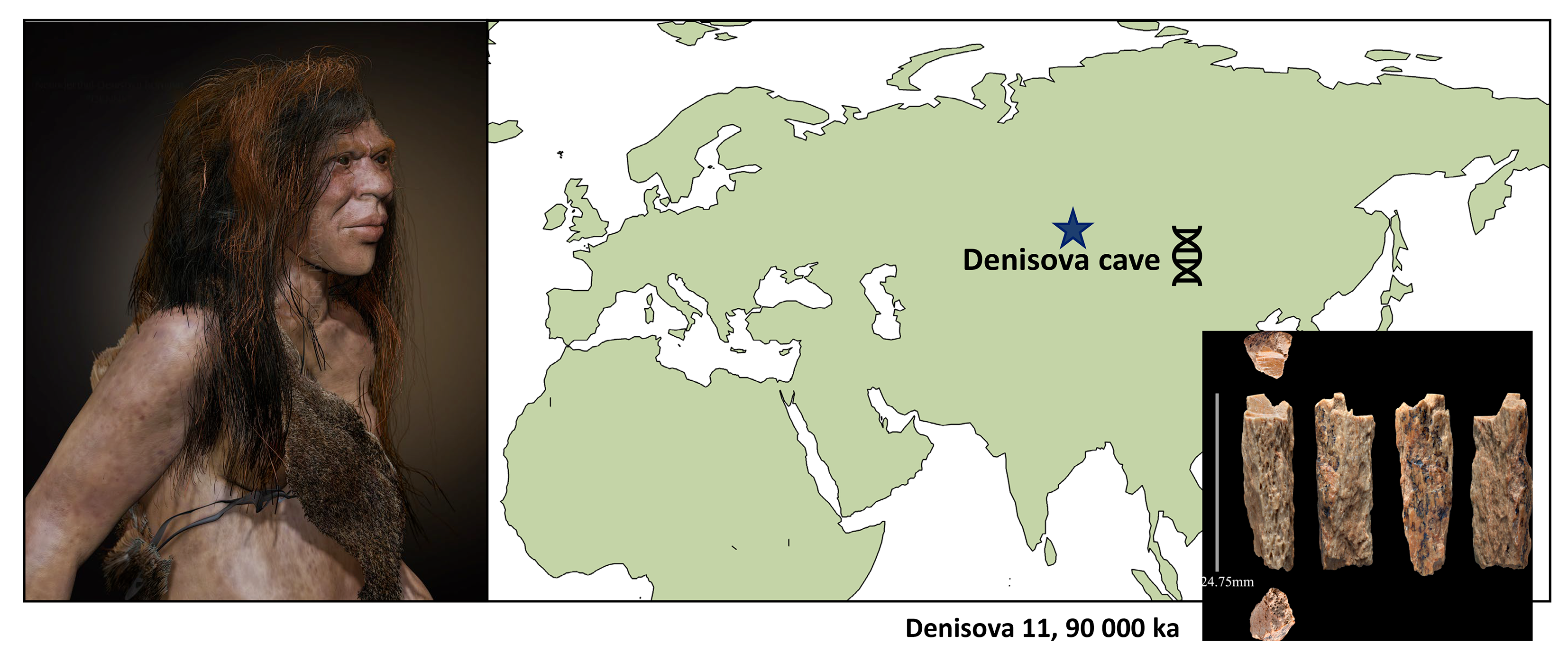
Denny and the relatives. Holding a finger to a groundbreaking discovery
DOI:
https://doi.org/10.6093/2724-4393/9491Keywords:
Denisova, Neanderthals, Paleogenomics, Inbreeding, Homo, PaleoanthropologyAbstract
The discovery of a distinctive fossil human genome at Denisova cave in Siberia has revolutionized the world of paleoanthropology during the last ten years. The Denisovan genome was later found in modern day people form Tibet, East Asia and Oceania, and from a few additional remains at Denisova cave. Among the latter, the 13 years old (Denisova 11) female individual nicknamed Denny stands out as exceptional. Denny had a Denisovan father with some Neanderthal ancestry in his blood, and a Neanderthal mother, suggesting mating between the two hominin groups was common in the Denisova area. As of today, although Denisovans are treated as a full-fledged species in everyday practice and several spectacularly preserved skull specimens found in China are suspected to represent true Denisovans, this human lineage has no formal definition, no type material, no established area of origin, and a dim origin tracing back to an archaic hominin migrating out of Africa around 1 million years ago. migrating out of Africa around 1 million
years ago.
Downloads