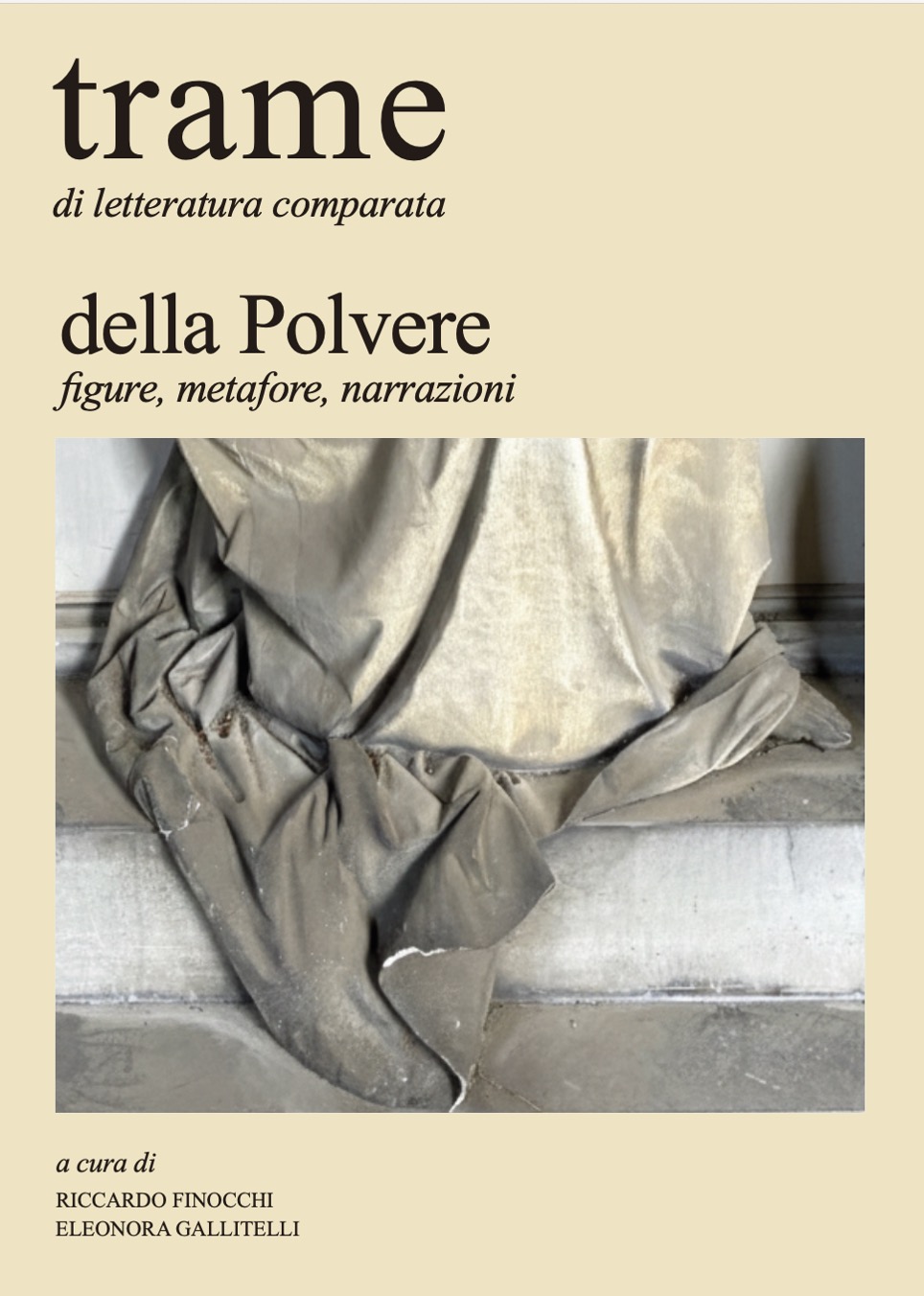
Dust as a metaphor for writing
from pre-Islamic odes to the visionary song of Adonis
DOI:
https://doi.org/10.6093/1720-5417/13285Keywords:
Pre-Islamic Poetry, Dust, Adonis, Mihyar, BergsonAbstract
In the Qadisah, dominant poetry. During pre-Islamic literature, the desert not only represents a physical place, but also a mobile country that never remains the same. It’s a lonely place but also a collective meeting around the fire that awakens absence and memories through dialectics. In Qadisah’s loving prologue, desert dust, a vanished field’s caretaker, elevates to a metaphor of writing itself. In pre-Islamic poetry, dust is a written trace’s metaphor; in the twentieth century, during the 50s in particular, it gains a more complex meaning, becoming the symbol of an open experiment of language and literature. In the collection Aghānī Mihyar al-dimashqī Adonis describes the poet as a “dust enchanter Sahir al-ghubar”, a human god that creates from the dust, following the alchemical principle of “Solve et Coagula”.