
Sulla rivista
Studi e ricerche di storia dell’architettura è la rivista open-access dell’Associazione Italiana di Storia dell’Architettura (Aistarch). Fondata nel 2017, SRSA esce due volte l’anno, è indicizzata nel catalogo ERIH PLUS ed è riconosciuta di classe A per i settori concorsuali dell’Area 08. Le sue lingue ufficiali sono l’italiano e l’inglese, ma in via eccezionale si accettano anche contributi scritti nelle principali lingue europee.
SRSA accoglie articoli di argomento storico-architettonico nella più ampia e varia accezione del termine, senza alcuna limitazione cronologica o geografica. Progetti e processi di costruzione – ma anche d’uso, riuso e trasformazione – di spazi, edifici e interi complessi urbani, siano essi di pietra o di carta, reali o solo immaginari, vi hanno pieno diritto di cittadinanza; purché indagati nella loro dimensione storica, con consapevolezza critica e attenzione alla specificità dei contesti. Benvenuti gli studi di caso, soprattutto se volti a tematizzare aspetti di metodo o nodi storiografici, in una prospettiva aperta alla comparazione e al confronto transdisciplinare. Privilegiati saranno l’originalità, il taglio problematico, gli spunti di riflessione capaci di andare al di là delle tradizionali divisioni accademiche, sollevando questioni in grado di interpellarci non solo come studiose e studiosi, ma anche e soprattutto in quanto cittadine e cittadini del mondo.
Ultimo numero
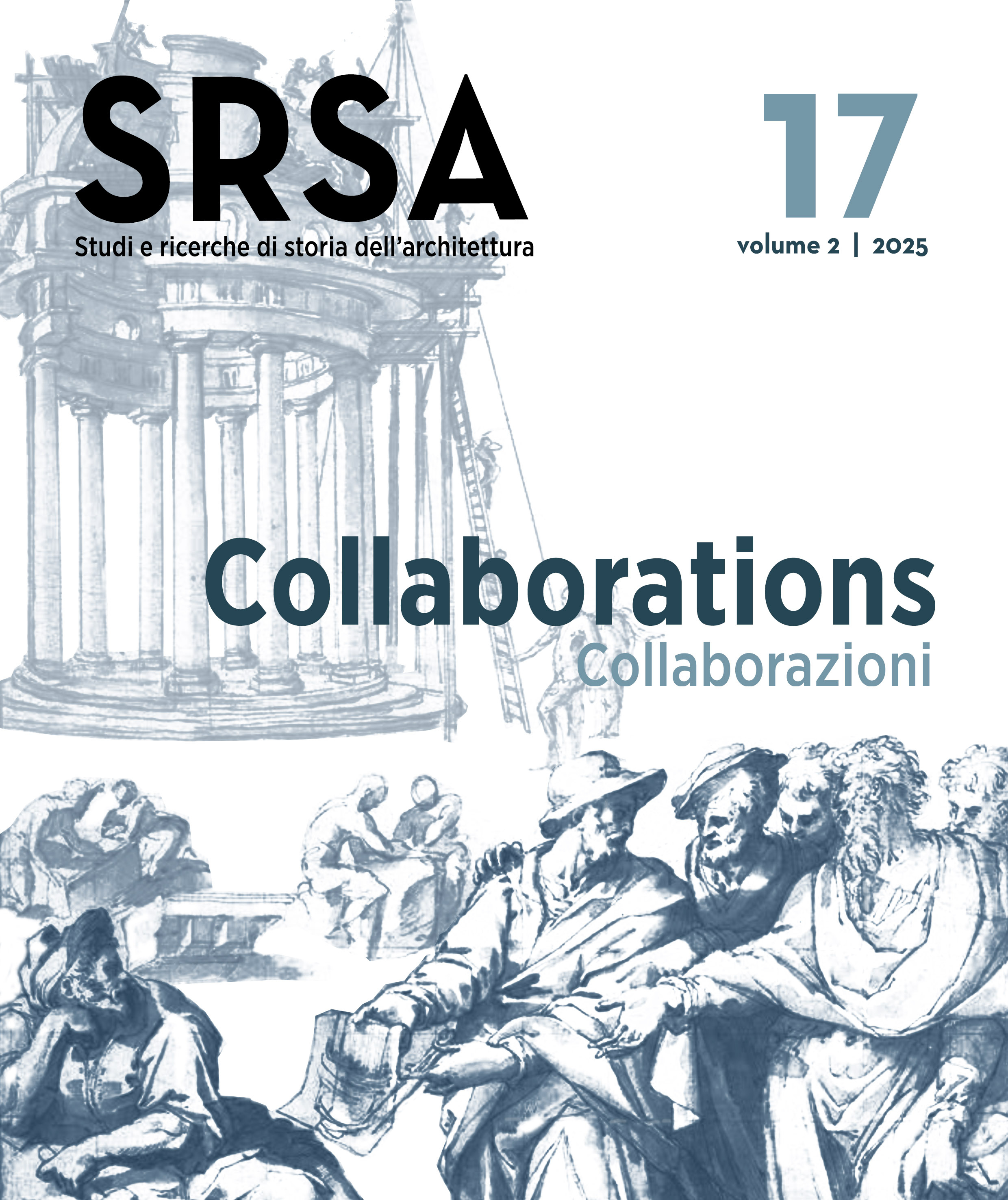
L’architettura è un’attività collaborativa. Un poeta, per comporre una poesia, ha bisogno solo di carta e penna (Omero non aveva neppure quelle), mentre a Giotto era bastato un sasso scheggiato per mostrare a Cimabue il proprio ingegno. Diverso il caso di chi deve costruire un edificio: non gli bastano idee e savoir faire, ha bisogno anche di molte braccia, molti soldi, molto tempo, molte competenze… molti apporti, da parte di molte persone diverse. Di molte di queste non conosceremo mai il nome, né il contributo specifico; di molti di quelli non potremo mai cogliere tutti i contenuti, le sfumature, i risvolti. Probabilmente, però, non è (solo) per il loro carattere sfuggente che le pratiche collaborative sono state, spesso continuano a essere, relativamente poco indagate dalla storiografia: nella loro opacità, esse non finiscono forse per appannare l’immagine dell’architetto come deus ex machina dei progetti di costruzione che per secoli in Europa i cultori di architettura hanno mirato a propagandare?